
4. Sleeping in Strange Positions (or on Their Back)
Does your dog sprawl out like a frog, curl into a tight ball, or sleep belly-up with paws in the air? It might look funny, but these positions actually reveal how comfortable — and safe — your dog feels.
What each sleeping position means:
| Position | What It Means |
|---|---|
| Curled up (nose-to-tail) | Conserving body heat; common in cooler rooms. |
| Side sleeper | Feeling relaxed and secure. |
| Belly-up (paws in air) | Complete trust and comfort; dogs do this only when they feel safe. |
| Superman (belly down, legs out) | Resting but ready to jump up quickly; common in active dogs. |
| Back-to-back with you or another dog | Bonding and affection — dogs mirror pack behavior. |
When to pay attention:
If your dog tosses and turns, pants heavily, or wakes up whining, it could signal:
- Pain or discomfort
- Anxiety
- Overheating
Otherwise, weird sleep positions are a sign of trust — not trouble.
Reference: AKC – Dog Sleeping Positions Explained
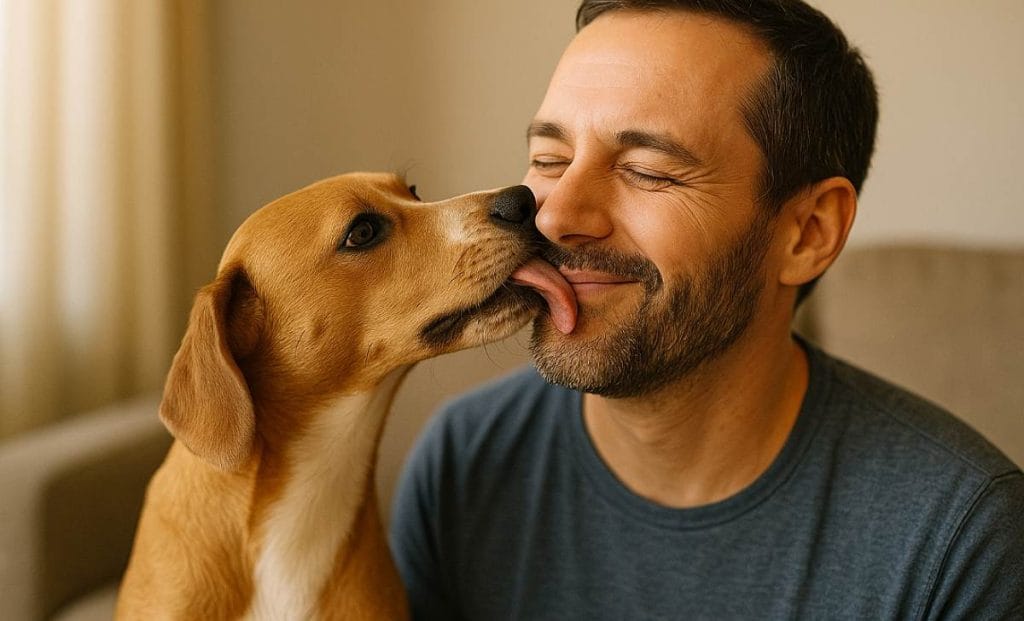
5. Licking You Constantly (or Themselves Too Much)
Dogs lick for many reasons; affection, communication, or self-comfort. While excessive licking can sometimes mean anxiety, most of the time, it’s their version of a hug or a “hello.”
Why dogs lick people:
- Bonding and affection: Licking releases endorphins that calm both dog and owner.
- Attention-seeking: If licking gets a response, they’ll keep doing it.
- Taste or salt: Sweat on your skin tastes appealing to them.
- Submission: Some dogs lick as a sign of respect or reassurance.
Why dogs lick themselves:
- Cleaning and grooming
- Relaxation (similar to nail biting in humans)
- Soothing minor irritation
When licking is excessive:
If your dog constantly licks one area, it could mean:
- Allergies or itchy skin
- Hot spots or infections
- Stress or compulsive disorder
If you notice raw patches, hair loss, or swelling, see your vet for an exam.
Tip: Redirect constant licking with toys, puzzles, or training sessions — mental focus reduces nervous habits.
Backlink: PetMD – Why Dogs Lick explains the science and emotion behind licking behavior.
Bonus: Other “Weird” But Totally Normal Dog Habits
Here are a few more quirks that confuse humans but make perfect sense to dogs:
| Weird Habit | What It Means |
|---|---|
| Sniffing other dogs’ rear ends | It’s their version of a handshake — exchanging scent information. |
| Tilting their head when you talk | Helps locate the sound source and read your facial expressions. |
| Chasing their tail | Usually playful curiosity (unless obsessive). |
| Rolling in grass or strange smells | Masking scent — a leftover instinct from hunting ancestors. |
| Humping objects or other dogs | Often dominance, excitement, or play — not always sexual. |
Most of these behaviors are completely harmless — and part of what makes dogs so entertaining.
When “Weird” Becomes a Problem
While most unusual habits are normal, pay attention if:
- The behavior becomes obsessive (e.g., non-stop licking or circling)
- There’s pain, whining, or discomfort involved
- It suddenly starts in an older dog (could indicate health issues)
Always contact your vet if you notice:
- Hair loss or wounds from licking
- Limping or stiffness after circling
- Vomiting after eating grass repeatedly
- Lethargy, appetite loss, or personality change
Weird is fine — worrying is not.
Tip: When in doubt, record the behavior on video and show it to your vet. That makes diagnosis easier.
How to Encourage Healthy, Normal Dog Behavior
- Provide mental and physical stimulation. Daily walks, puzzle toys, and obedience games prevent boredom behaviors.
- Reward calm and balanced actions. Praise your dog for calm play, gentle greetings, and healthy habits.
- Keep a regular routine. Consistency reduces stress-driven habits like over-licking or pacing.
- Schedule regular vet checkups. Early detection prevents minor issues from becoming emergencies.
2 Comments
Dog like lick you
You are not going to do anything today or just the time I have to go back to work today or tomorrow morning