
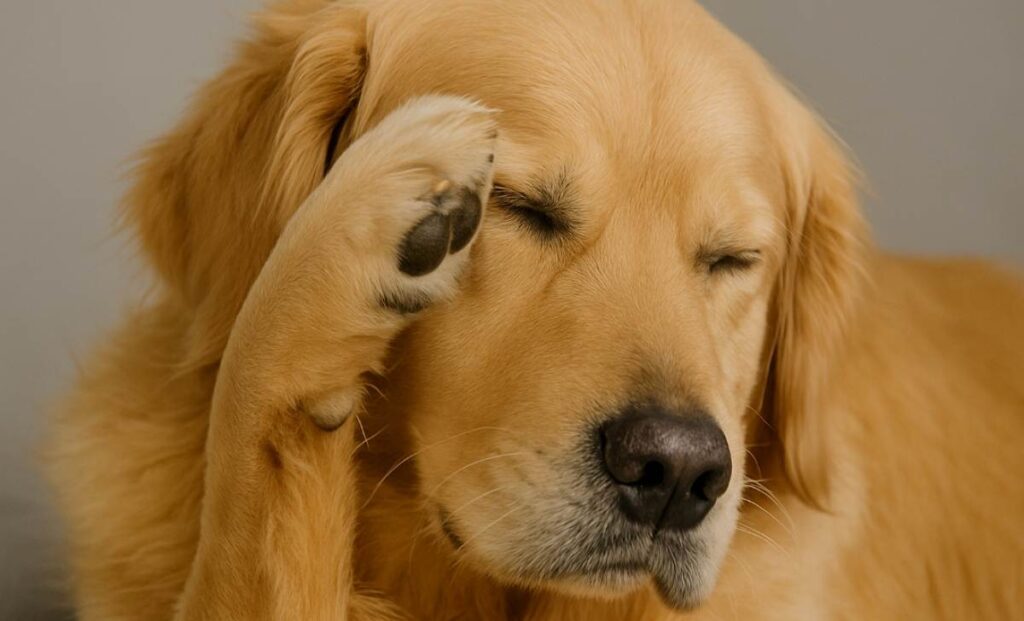
3. Excessive Licking or Biting
If you notice your dog constantly licking, chewing, or biting the same spot, it’s not just a quirky habit—it’s usually a sign of discomfort or pain. Dogs instinctively lick or gnaw at areas that are bothering them, much like humans rub a sore muscle.
But when the licking becomes frequent and obsessive, it can actually make the problem worse, turning a small irritation into an infection.
Why Dogs Lick or Bite Themselves
- Skin Irritation or Allergies – Dogs with food allergies, flea bites, or environmental triggers (like pollen or dust) often lick their paws and legs.
- Injuries or Wounds – Even a small cut, scratch, or bruise can cause a dog to repeatedly lick the area.
- Joint or Internal Pain – Sometimes dogs lick over a joint or body part that hurts internally, even if there’s no visible wound.
- Infections – Yeast or bacterial infections on the skin often come with redness, swelling, or a foul smell.
- Anxiety or Stress – Dogs may develop “licking habits” as a form of self-soothing, similar to humans biting nails.
When to Be Concerned
Excessive licking can quickly create a “hot spot”—a red, raw, painful patch of skin. Warning signs that mean it’s time to call the vet include:
- Swelling or pus around the area.
- Foul odor (suggesting bacterial infection).
- Redness or bleeding from over-licking.
- Your dog growls or yelps when you try to touch the spot.
- The licking is constant, even during sleep or rest.
These could indicate a serious infection, abscess, or deeper medical issue.
What You Can Do at Home
- Inspect the Area Closely – Look between toes, under fur, and around joints for cuts, ticks, or swelling.
- Clean Gently – Use lukewarm water or a vet-approved antiseptic spray to clean minor irritations.
- Discourage Over-Licking – An Elizabethan collar (cone) or protective bootie can prevent further damage until a vet visit.
- Track the Behavior – Note if licking happens after walks, mealtime, or during stressful events—it may reveal allergies or anxiety.
Long-Term Care & Vet Treatment
Depending on the cause, your vet may suggest:
- Antibiotics or antifungal medication for infections.
- Allergy testing or special diets if food is the culprit.
- Anti-inflammatory medication for joint pain.
- Behavioral training or stress management for anxiety-driven licking.
1 Comment
That