
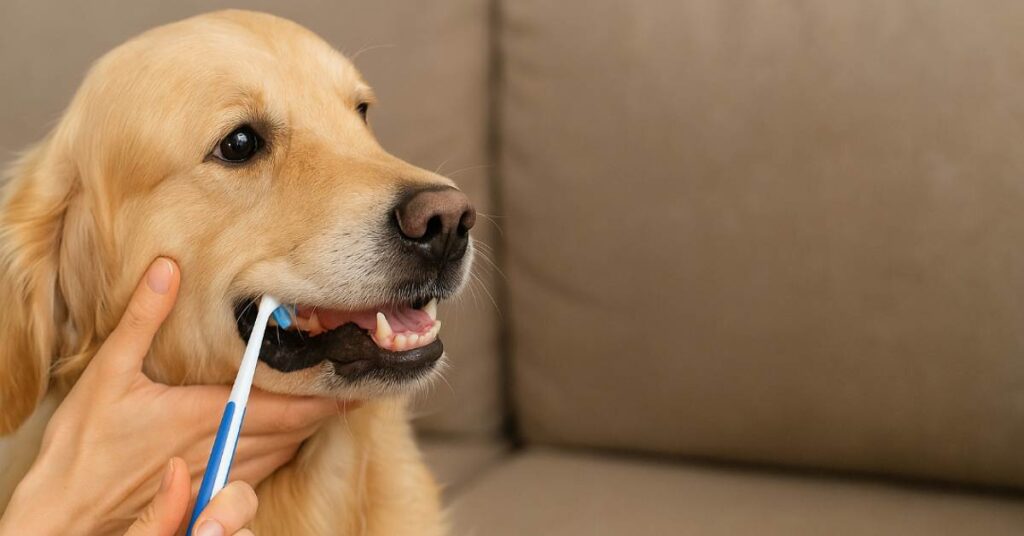
3. Red, Swollen, or Bleeding Gums
Healthy gums should be:
- Pink
- Firm
- Not painful
Early gum disease (gingivitis) looks like:
- Bright red gum edges
- Swelling
- Bleeding when touched
This stage is reversible if treated early.
4. Drooling More Than Usual
Excessive drooling can signal:
- Mouth pain
- Gum infection
- Loose or infected teeth
Watch for:
- Thick saliva
- Drool with blood
- Pawing at the mouth
5. Difficulty Chewing or Eating
Your dog may:
- Drop food while eating
- Chew only on one side
- Avoid hard food or treats
- Eat slower than usual
Dogs often adapt quietly, so subtle changes matter.
6. Pawing at the Mouth or Face
This behavior often means discomfort.
Look for:
- Rubbing face on furniture
- Scratching near the mouth
- Sudden sensitivity around the jaw
7. Loose or Missing Teeth
Adult dogs should not lose teeth.
Signs include:
- Teeth that move when touched
- Sudden tooth loss
- Visible gaps
This usually indicates advanced periodontal disease.
Hidden Signs Many Owners Miss
Some dental problems don’t show clearly.
Behavioral Changes
Dental pain can cause:
- Irritability
- Less playfulness
- Withdrawal
- Aggression when touched
If your dog “acts different,” check the mouth.
Nasal Discharge or Sneezing
Upper tooth infections can affect sinuses.
Watch for:
- One-sided nasal discharge
- Sneezing
- Facial swelling
This requires immediate veterinary care.
What Causes Dental Problems in Dogs?
1. Plaque and Tartar Buildup
The #1 cause. Bacteria feed on food debris and create plaque.
2. Poor Oral Hygiene
Most dogs never receive regular dental care at home.
Diet Factors
- Soft foods stick to teeth
- Sugary treats increase bacteria growth
3. Breed and Size
Small breeds are especially at risk because:
- Crowded teeth trap debris
- Smaller jaws reduce airflow
Age
Dental disease worsens with age, but starts early.
Why Dental Disease Is More Serious Than It Looks
Dental infections don’t stay in the mouth.
According to VCA Animal Hospitals, oral bacteria can enter the bloodstream and affect vital organs.
Potential complications include:
- Heart disease
- Kidney damage
- Liver infections
- Weakened immune system
When to See a Vet Immediately
Do not wait if you notice:
- Bleeding gums
- Facial swelling
- Refusal to eat
- Loose teeth
- Severe bad breath
- Signs of pain
Early treatment is simpler, safer, and cheaper.
What You Should NOT Do at Home
Avoid:
- Human toothpaste
- Sharp tools to scrape teeth
- Ignoring symptoms
- Online “miracle cures”
Improper cleaning can damage gums or worsen infections.
Simple Weekly Dental Check You Can Do at Home
Takes under 3 minutes:
- Lift the lips
- Check gum color
- Look for tartar
- Smell the breath
- Note chewing behavior
Consistency matters more than perfection.
How Early Detection Saves You Money
Early-stage dental care usually means:
- Basic cleaning
- Short treatment
- Lower costs
Advanced disease can require:
- Tooth extractions
- X-rays
- Anesthesia
- Ongoing medication
Catching problems early protects your dog and your budget.