
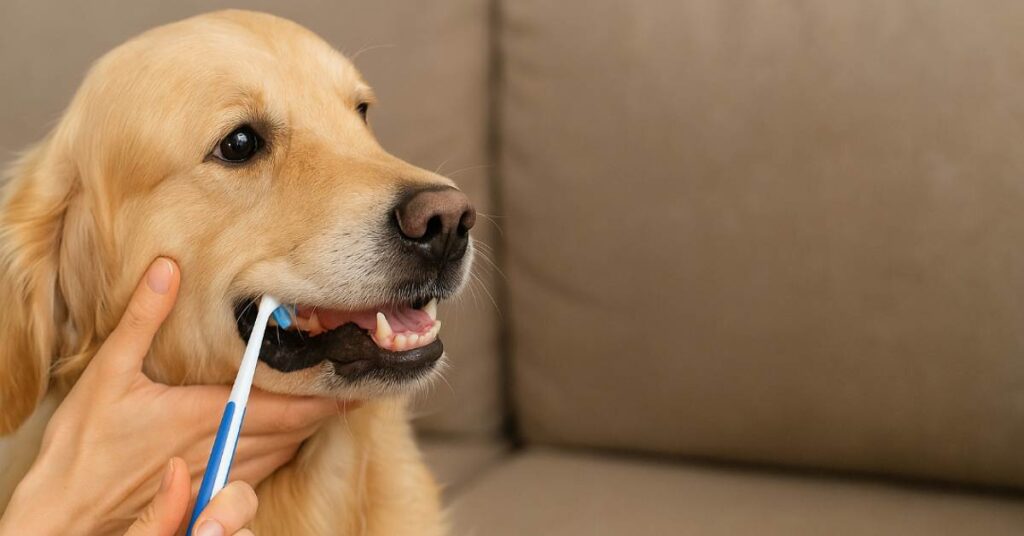
If your dog has bad breath, avoids chewing, or has red gums, those are often the earliest signs of dental problems. Dental disease doesn’t start with broken teeth, it starts quietly, and most dogs suffer in silence until the pain becomes severe.
This article shows you exactly what to look for, clear signs, causes, and when to act, so you can protect your dog’s health and avoid expensive vet bills later.
Why Dental Problems Are So Common in Dogs
Dental disease is one of the most common but overlooked health problems in dogs.
According to the American Kennel Club, most dogs show signs of dental disease by age three.
Dogs are vulnerable because:
- They don’t brush their own teeth
- Food particles stick to teeth easily
- Bacteria multiply fast in the mouth
- Plaque hardens into tartar within days
Left untreated, dental disease can lead to:
- Tooth loss
- Chronic pain
- Infections spreading to the heart, liver, or kidneys
7 Early Signs of Dental Problems in Dogs
Dental disease develops in stages. Catching it early makes a huge difference.
1. Bad Breath That Doesn’t Go Away
Occasional dog breath is normal. Persistent, strong odor is not.
Warning smells include:
- Rotten
- Sour
- Metallic
- Fishy
Bad breath is usually caused by bacteria buildup under the gum line, not food.
The American Veterinary Medical Association confirms that chronic bad breath is one of the first indicators of periodontal disease.
2. Yellow or Brown Tartar on Teeth
Lift your dog’s lip and look at the teeth.
Early signs include:
- Yellow film near the gum line
- Brown or dark buildup on back teeth
Tartar is hardened plaque and cannot be brushed off once formed.