
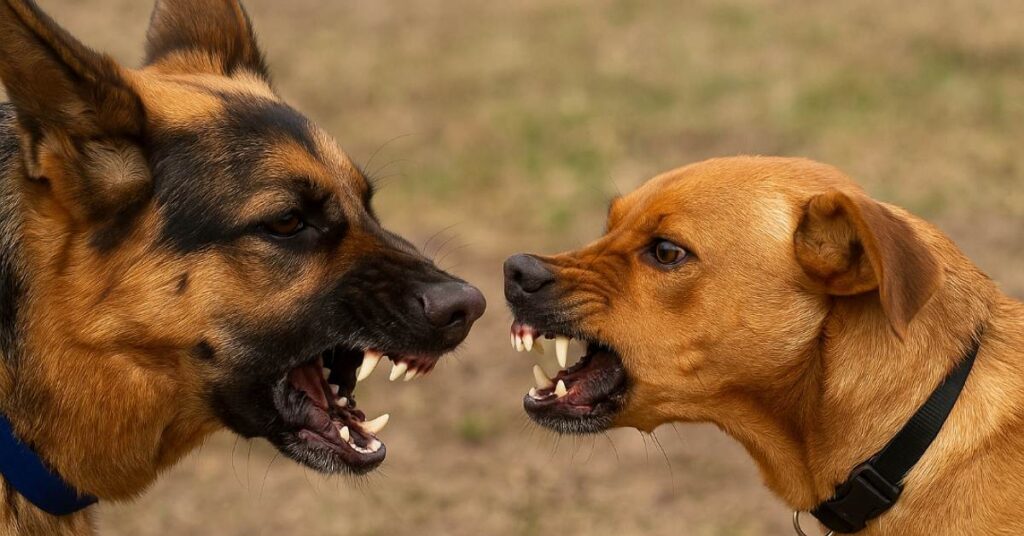
6. Avoid Dog Parks Until Ready
Dog parks might seem like a good place to “socialize” your dog, but if your dog struggles with aggression, a dog park can make the problem worse. These spaces are high-energy, unpredictable environments where dogs can easily get overstimulated and lash out.
Why Dog Parks Are Risky
- Uncontrolled environments: Too many dogs at once can overwhelm yours.
- Overstimulation: Running, barking, and rough play can trigger aggression.
- Owner behavior: Not every owner supervises their dog properly, which can escalate conflicts.
For an aggressive or reactive dog, this is not the place for exposure therapy.
Safer Alternatives
Instead of throwing your dog into a crowded dog park, try these steps:
- Stick to open-area walks where you have control over the environment.
- Cross the street when another dog is approaching to give your dog space.
- Reward calm behavior when your dog notices another dog but doesn’t react negatively.
Over time, these controlled experiences teach your dog how to remain calm around others—without the chaos of a dog park.
7. Teach Obedience Commands
One of the most effective ways to manage aggression is by giving your dog something better to do. Strong, reliable obedience commands allow you to redirect their focus before aggression takes over.
Core Commands to Teach
- “Sit” – Helps your dog stay still instead of lunging.
- “Stay” – Creates distance and calmness when another dog is nearby.
- “Leave it” – Redirects your dog from fixating on another dog.
- “Watch me” – Shifts your dog’s focus back to you when distractions appear.
These simple commands act like “tools in your pocket” whenever a tense situation arises.
Training Tips
- Keep sessions short (5–10 minutes) so your dog doesn’t lose focus.
- Train in different environments—backyard, sidewalk, park—to build reliability.
- Use high-value rewards (favorite treats or toys) to make obeying worth it.
- Practice daily, even for just a few minutes. Consistency builds strong habits.
8. Use the Right Equipment
Managing an aggressive or reactive dog isn’t just about training—it’s also about having the right tools for safety and control. The right equipment can make walks less stressful for you and your dog while preventing dangerous situations.
Recommended Tools
- Front-Clip Harness
Redirects pulling without putting pressure on your dog’s neck. It’s especially useful for dogs that lunge forward.
- Head Halter
Provides more control over very strong dogs. It works similarly to a horse halter, guiding the dog’s head gently so you can steer their attention.
- Basket Muzzle
A safe and humane way to prevent bites during training. Dogs can still pant, drink, and take treats while wearing one. Important note: a muzzle is a management tool, not a punishment.
What to Avoid
Do NOT use shock collars or prong collars.
These devices often increase fear, frustration, and aggression. Instead of solving the problem, they can make it worse by teaching your dog to associate pain with other dogs.
6 Comments
Thanks you
Yes
Wow
Cool
Thank you
Gracias