
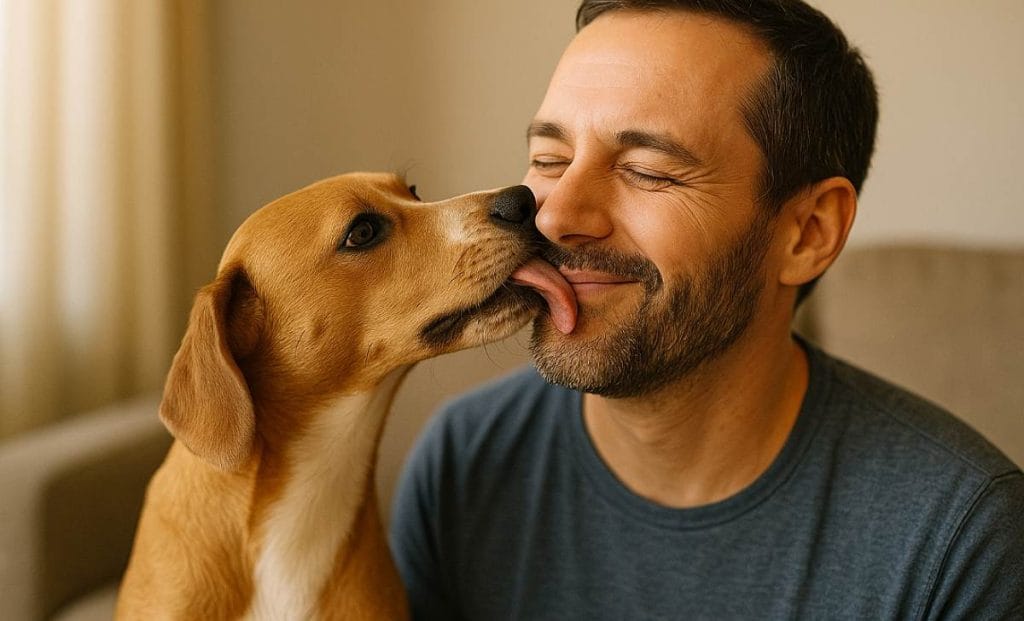
13. They’re Imitating Other Dogs
If you live in a multi-dog household, you may notice that when one dog starts licking, the others soon follow. This is because dogs are highly social animals and often imitate the behaviors of their pack.
Why this happens:
- Pack bonding – Licking is a way of reinforcing group unity.
- Learned behavior – Younger or lower-ranking dogs copy what older dogs do.
- Attention-sharing – If one dog gets affection by licking, the others may try it too.
What starts as a single dog’s gesture can quickly become a group habit. Before you know it, you may have two or three pups all trying to lick you at once!
Fun fact: This copycat behavior is also seen in other areas—like barking, howling, or even the way dogs rest. One dog’s action often sparks a chain reaction in the group.
14. They Think You’re Part of the Family
Dogs don’t just lick for taste or attention—they also lick as a form of social grooming. In the wild, pack members lick each other to clean, strengthen bonds, and show unity.
When your dog licks you, they may be treating you just like another member of their group. In their eyes, you’re not just their owner—you’re family.
What this means:
- “Cleaning” you – Just as dogs lick each other’s fur, they may lick your skin or clothes.
- Strengthening bonds – Grooming licks help reinforce trust and closeness.
- Showing acceptance – Your dog sees you as part of their pack structure.
Fun fact: Scientists call this allogrooming, and it’s common in many social animals—including lions, primates, and birds. For dogs, licking their human is just another way of saying:
“You belong with us.”
15. It’s a Medical Signal
Sometimes licking isn’t just about affection or habit—it can be a warning sign. Dogs have an incredible ability to detect subtle changes in their owners. They’ve been known to lick specific areas of the body where humans had injuries, infections, or even underlying medical issues.
Examples include:
- Licking wounds or cuts, drawn to the smell of blood or tissue changes.
- Focusing on one area of the body repeatedly, even when nothing looks wrong.
- Alerting owners by persistently licking when something feels “off.”
While it might seem harmless, excessive or targeted licking should never be ignored. Dogs may sense things we don’t, from skin infections to internal discomfort.
Most licking is normal, whether it’s affection, bonding, submission, or curiosity. But when it becomes obsessive, sudden, or highly focused, it could be your dog’s way of saying something is wrong.
If in doubt, always consult your vet. It’s better to be safe, and your dog’s unusual behavior might just be an important clue.
When Is Dog Licking a Problem?
While licking is usually harmless, too much can signal a problem:
- Licking you obsessively: May point to anxiety or compulsion
- Licking objects/floors constantly: Could be a sign of boredom or nausea
- Licking their own paws/body excessively: Might mean allergies, wounds, or parasites
If you’re unsure, it’s best to get advice from your vet or a behaviorist.
Should You Let Your Dog Lick You?
It depends on your comfort level—and your dog’s health.
Tips for Safer Dog Licks:
- Avoid licking near your mouth or open wounds
- Wash your skin afterward
- Don’t encourage licking if it becomes excessive
5 Comments
Wow thank you for this info!
Thank for this information
Thanks for this info
Thanks for this info
So useful an interesting