
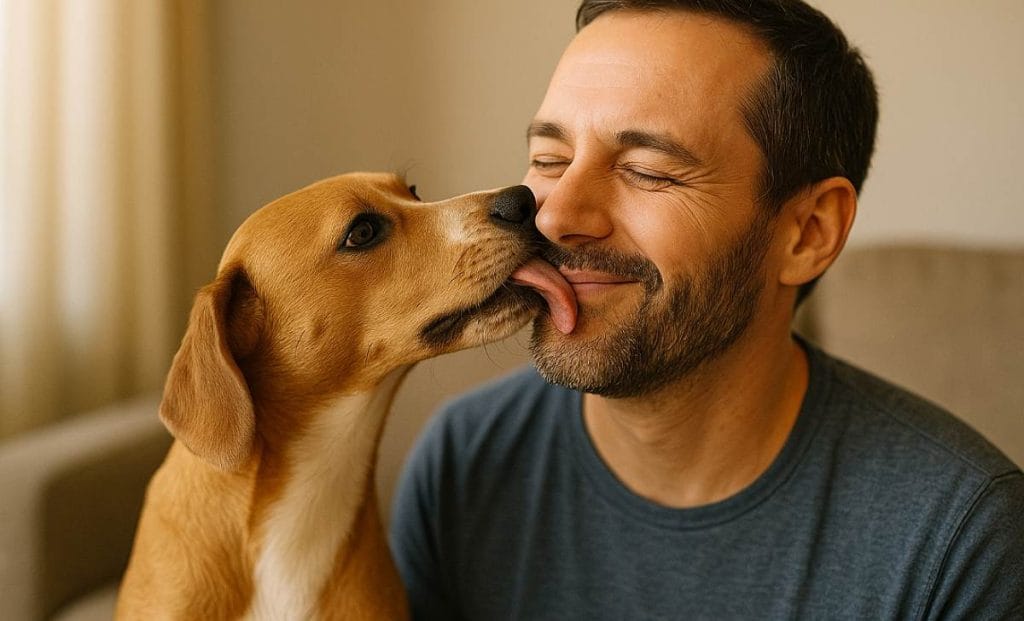
7. They’re Bonding With You
In the wild, dogs and wolves often lick each other as part of grooming and social bonding. It’s a way to strengthen relationships, show care, and maintain harmony in the pack.
When your dog licks you, they may be extending the same instinct to you—treating you as one of their own.
Common bonding licks include:
- Gentle licks on the face, hands, or arms.
- Licking after playtime as a “thank you.”
- Comforting licks when you seem sad or stressed.
These gestures aren’t about submission or taste—they’re about connection. For your dog, licking you can be the equivalent of saying:
“You’re family.”
Fun fact: Mother dogs lick their puppies constantly—not just to clean them, but also to bond and reassure them. This early-life behavior often carries into adulthood.
8. It’s How They Greet You
For many dogs, licking is simply their way of saying “Hello, I missed you!”
When you come home after a long day, your pup may wag their tail, jump around, and shower you with licks. This excited greeting is a sign of pure joy and affection.
Why dogs greet with licks:
- Pack instinct – In the wild, wolves lick returning members as a welcome ritual.
- Excitement – Your arrival is the highlight of their day.
- Affection – It’s their way of showing love without words.
These happy licks are usually quick, enthusiastic, and paired with tail wags and playful body language. It’s one of the clearest signals that your dog considers you their favorite person.
Tip: If the greetings feel too intense (jumping + licking), train your dog to sit calmly before rewarding them with attention. This channels their excitement into good manners.
9. It’s a Sign of Puppy Behavior
Licking is one of the very first behaviors dogs learn as puppies. In the wild, wolf pups lick their mother’s face to encourage her to regurgitate food. It’s also how they get comfort and reassurance.
Domestic puppies do the same—licking their mom and littermates to ask for food, warmth, and attention.
When your adult dog licks you, it may be a leftover instinct from those early days. In their mind, you’ve taken the role of “parent figure,” and licking becomes a way to seek comfort or show need.
Some dogs never outgrow this puppy-like behavior, and instead, they transfer it to their human family. That’s why you might notice your dog licking you more when they’re hungry, tired, or simply seeking affection.
Fun fact: This is also why younger dogs often lick older, dominant dogs—it’s a mix of respect and a throwback to puppyhood habits.
5 Comments
Wow thank you for this info!
Thank for this information
Thanks for this info
Thanks for this info
So useful an interesting