
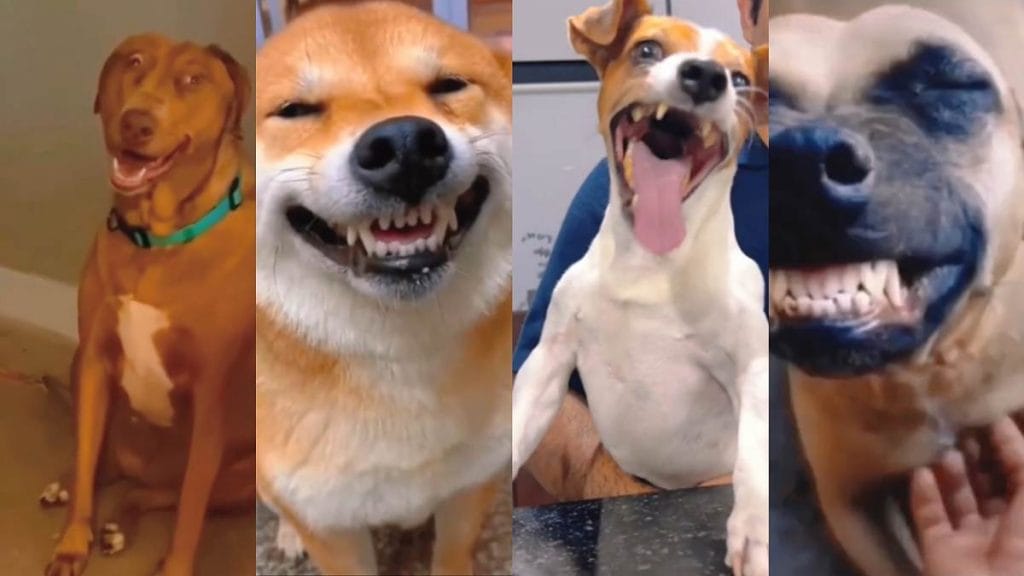
Dogs have been our loyal companions for thousands of years, sharing our homes, adventures, and even our emotions. One question that often arises among dog owners and enthusiasts is: Do dogs laugh? While dogs don’t laugh in the same way humans do, they exhibit behaviors and sounds that resemble laughter, especially during play.
The Science Behind Dog “Laughter”
Research indicates that dogs produce a unique sound during play, often referred to as a “play-pant.” This sound is characterized by a breathy panting, distinct from regular panting associated with heat or exertion.
Animal behaviorist Patricia Simonet conducted studies analyzing these play-pants and discovered that they have a broader range of frequencies compared to typical dog panting. This led to the conclusion that the play-pant could be considered a form of canine laughter.
How Do Dogs Express Joy?
Beyond the play-pant, dogs display joy and playfulness through various behaviors:
- Play Bows: A common gesture where a dog stretches its front legs forward and leans down, signaling an invitation to play.
- Tail Wagging: A wagging tail, especially when accompanied by a relaxed body posture, often indicates happiness.
- Facial Expressions: Some dogs appear to “smile” by opening their mouths slightly, with relaxed lips and a gentle expression.
- Bouncy Movements: Energetic hopping or bouncing during interactions can be a sign of excitement and joy.
Canine Laughter’s Impact on Other Dogs
Interestingly, the sound of canine laughter can have positive effects on other dogs. In shelter settings, playing recordings of the play-pant sound has been shown to reduce stress-related behaviors and encourage social interactions among dogs.
This suggests that canine laughter serves as a form of communication, promoting relaxation and bonding.
Source: Wikipedia
Comparisons with Other Animals
Laughter-like behaviors aren’t exclusive to dogs. Other animals, such as primates and rats, also exhibit vocalizations that resemble human laughter during play or enjoyable activities.
For instance, chimpanzees produce a panting sound during play, and rats emit high-frequency “chirps” when tickled, indicating a shared evolutionary trait among social animals to express joy.
Source: Wikipedia
Watch Dogs Laughing
For a delightful example of dogs exhibiting playful behaviors that resemble laughter, check out the video above.
1 Comment
Nice I love this